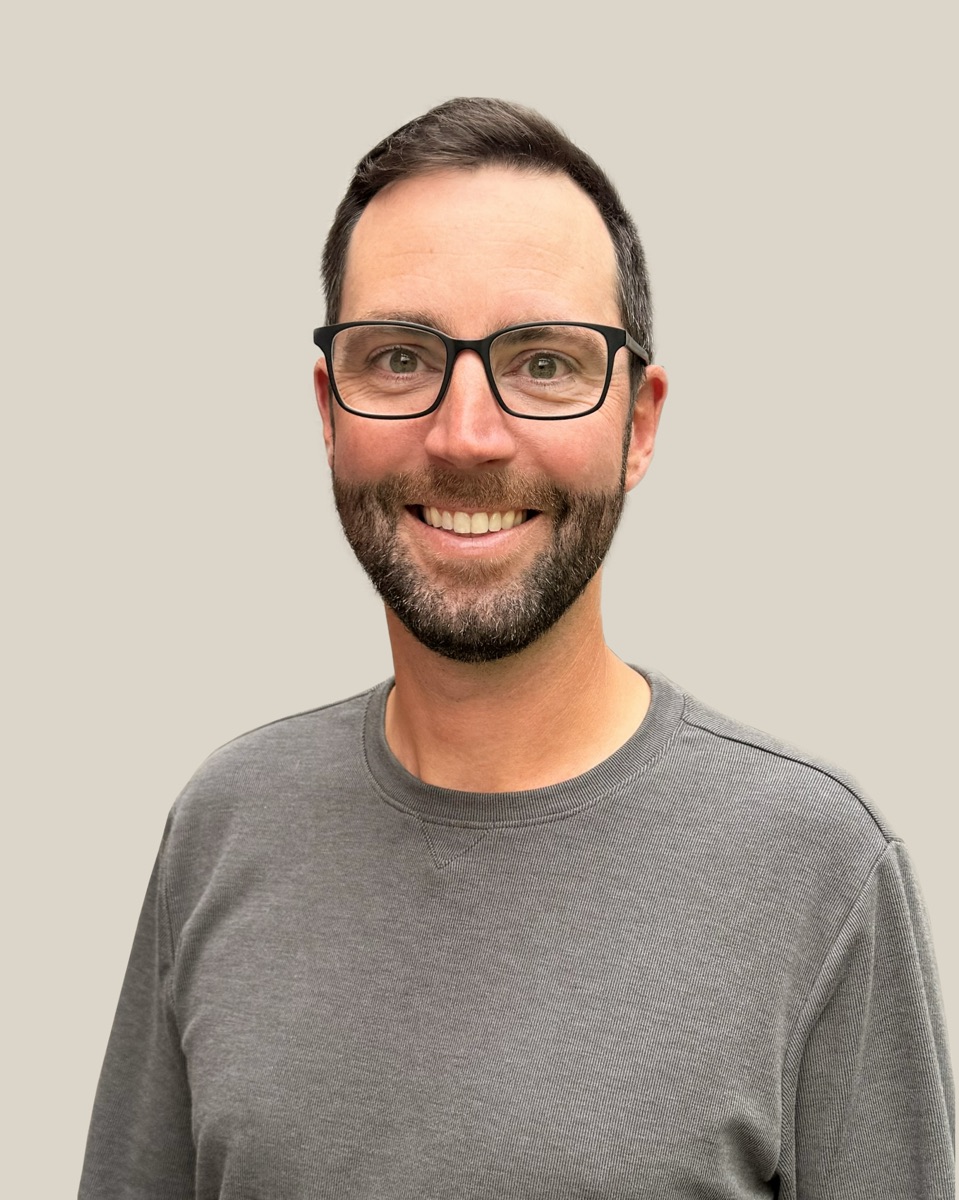
Earlier this year we shared that Brad Dyment had joined the firm as Partner and President. Here is the longer story — where he comes from, why he chose this firm, and what he intends to build.
Most people don’t arrive at wealth management from technology. What’s the path?
It looks like a leap, but it’s closer to the opposite. My career has been in technology — design, product, operations — but personal finance has been a constant since I was a child. My dad got me into investing early, and following markets has never once felt like work. It’s the thing I do when nobody is asking. Wealth management is the intersection: the craft I’ve practiced professionally, applied to the subject I’d be studying anyway.
There’s an old saying that if you love what you do, you’ll never work a day in your life. A few months into this, that’s exactly what it feels like. I’m having an enormous amount of fun.
You’ve known Mark a long time.
Sixteen years — and for most of them, I was his client.
I think that matters more than anything else I could say here. I’ve sat on the other side of this table. I know what the advice is worth because my family has lived on it. When you get involved in a company, the decision is ultimately about people — and Mark is someone I trust with my own capital, which is not a figure of speech. The same goes for the team around him. I watched them work for years before I ever considered working alongside them.
What does a President actually do at a firm this size?
The honest answer: whatever the firm needs.
I spent more than a decade helping build Fullscript from a small startup into a $2.5-billion company with more than a thousand people, and the through-line was never a fixed job description — it was finding the thing that most needed doing and doing it. Here, that means some days I’m deep in the weeds and other days I’m working on where the firm goes next. The job is making sure this team is set up to succeed, because that is ultimately what taking care of clients means.
What were you not willing to compromise on?
Values, principally. Mark and I are aligned on them to a degree that’s rare, and it’s the reason this partnership works.
Beyond values, two things drew me in. The first is how this firm approaches private markets. I’ve watched — as a client, and through my network — how the industry works when the incentives point the wrong way: products recommended because of what they pay the house, not what they do for the client. What Mark and the team have built is the opposite: access to private strategies our clients ask for and could rarely reach on their own, each one there because it earned its place.
The second is the relationship itself — and honestly, this is where I see the most room to raise our standard. A great deal of careful work happens for clients that they never see. I think clients should feel it. That means communication that arrives before the question is asked — tax season is a good example: installments, deadlines, the coordination that too often falls between an accountant and an advisor.
I’ve also seen — myself, and through friends who built companies — what happens when wealth grows past a certain point. Trusts, corporate structures, tax questions like AMT: it arrives all at once, and it is genuinely complex. The people navigating that don’t need another product. They need someone coordinating the complexity before it becomes urgent. Our team does this work well, and I want us doing even more of it, more proactively.
The standard I want is simple: we show up slightly before we’re needed.
What changes for clients with you here?
What I care most about is what you can own, and what you’ll use.
Ownership first. The defining companies of this era are staying private longer, and much of their value is created before they ever list. We have already brought clients direct access to pre-IPO companies of exactly that kind, and we are working to widen it. The form of the access matters as much as the access itself: a direct position — on the cap table, or through a properly structured secondary — held at what the asset is actually worth, rather than a listed wrapper trading well above the value of what it holds. I don’t expect this trend to slow, and I’d like to see our clients on the right side of it.
Then there is the experience of being a client here. The software our clients use to access their portfolios is not yet at the standard of everything else this firm does, and I intend to close that gap. AI is going to transform this part of our industry. A client should be able to ask any question about their own portfolio and get a clear answer — at any hour, on their own time, without waiting on us. We’re actively working toward software built for that.
None of this replaces the people. The phone will still be answered by someone whose name you know. The technology exists to make the humans sharper, not scarcer.
What have you been thinking about lately?
AI, mostly — and my kids.
I left Fullscript four years ago to spend more time with my four young children, which I’m grateful for every day. Much of the remaining time has gone to keeping up with AI, and the pace of the last four years is unlike anything I’ve seen in my career — following it properly is nearly a full-time job.
Most of that thinking comes back to capital markets. AI is doing two things at once: creating wealth at a pace we haven’t seen, and filling the world with fast, confident, generic answers. Both lead to the same place — when intelligence becomes abundant, judgment becomes the scarce asset. That’s the part I think people get backwards. The better these tools become, the more it matters to have someone who knows your family, who is accountable to you, and who can tell you which of those confident answers deserves your capital.
A shift this large doesn’t arrive often — and it’s rare to meet one inside a firm small enough to move quickly, alongside clients we know by name. Much of our industry will spend the next decade retrofitting. We get to build. The most interesting chapter of this firm is the one that starts now.